

Ninja Stadium is a well-known cricket and sporting venue located in Bellerive, Hobart, Tasmania, Australia. Formerly known as Bellerive Oval and Blundstone Arena, the ground has hosted several international cricket matches, domestic tournaments and major sporting events. It is one of Tasmania’s most important sporting destinations and serves as the home venue for the Hobart Hurricanes in the Big Bash League.
The stadium has gained recognition for its scenic surroundings, competitive playing conditions and memorable cricket performances. It has witnessed Test matches, One Day Internationals (ODIs) and T20 Internationals featuring Australia and visiting international teams.
Ninja Stadium is also known for its balanced pitch, where fast bowlers can receive assistance from the new ball while batters can score freely after settling at the crease. Its location near the River Derwent makes it an attractive destination for cricket fans and tourists visiting Hobart.
This article covers Ninja Stadium’s history, location, seating capacity, pitch report, international cricket records, highest scores, memorable matches and important facts.
Ninja Stadium Overview
Ninja Stadium is situated in Bellerive, on the eastern shore of the River Derwent in Hobart. It is an important sporting venue in Tasmania and has developed into a recognised international cricket ground. The stadium is primarily used for cricket but also hosts Australian rules football and other sporting events.
The ground is home to the Tasmanian Tigers in domestic cricket and the Hobart Hurricanes in the Big Bash League. With its established infrastructure, spectator facilities and international cricket history, Ninja Stadium continues to play an important role in Australian cricket.
Quick Information About Ninja Stadium
| Feature | Details |
| Stadium name | Ninja Stadium |
| Former name | Bellerive Oval / Blundstone Arena |
| Location | Bellerive, Hobart, Tasmania |
| Country | Australia |
| Established | 1914 |
| Opened as an international cricket venue | 1989 |
| Seating capacity | Approximately 19,500 |
| Home team | Tasmania Tigers |
| BBL team | Hobart Hurricanes |
| Main sport | Cricket |
| Ends | River End and Church Street End |
| International formats | Test, ODI and T20I |
| Stadium type | Outdoor cricket ground |
Read Also: Dubai International Stadium || Heritage Bank Stadium
History of Ninja Stadium
The history of Ninja Stadium dates back to 1914, when Bellerive Oval was established as a local sporting ground. Over time, the venue developed into one of Tasmania’s leading sports facilities. Its importance increased as cricket gained popularity in the region and the ground started hosting major domestic competitions.
A major milestone arrived in December 1989 when the venue hosted its first Test match between Australia and Sri Lanka. This development established Hobart as an important destination on the international cricket calendar. The ground subsequently hosted several memorable matches involving Australia and other international teams.
From Bellerive Oval to Ninja Stadium
The venue has been known by different names during its history. It was originally called Bellerive Oval because of its location in the Bellerive suburb of Hobart. Later, it became known as Blundstone Arena through a naming-rights agreement.
The ground was subsequently branded Ninja Stadium following another naming-rights partnership. Although the commercial name has changed, it remains the same historic sporting venue. Its cricketing identity and importance to Tasmanian sport have continued through these changes.
Development of the Stadium
Ninja Stadium has undergone several improvements to provide better facilities for players and spectators. The development work has included upgraded seating areas, player facilities, media infrastructure and improved spectator amenities.
These improvements have helped the venue host international matches and domestic tournaments. Today, it is recognised as one of Australia’s important cricket grounds and continues to attract fans during major sporting events.
Ninja Stadium Location and How to Reach
Ninja Stadium is located at 15 Derwent Street, Bellerive, Hobart, Tasmania, Australia. It is situated on the eastern side of the River Derwent, opposite Hobart’s central business district. The venue is approximately a 10-minute drive from the city centre, making it accessible for local residents and visitors.
Visitors can reach Ninja Stadium through different transport options, including private vehicles, taxis and public transport. During major cricket matches, additional transport arrangements may be provided to help spectators reach the ground conveniently.
By Road
Travelling by road is one of the convenient ways to reach Ninja Stadium. The stadium is connected to Hobart through major local roads, and visitors can use taxis or private vehicles to reach the entrance.
However, traffic can increase considerably during international matches and Big Bash League fixtures. Visitors should plan their journey early and check event-specific parking arrangements before travelling.
By Bus and Public Transport
Local public transport connects Bellerive with different parts of Hobart. Visitors can use available bus services to reach the stadium area and walk to the entrance.
Special transport services may also operate during major sporting events. Checking the latest public transport schedules before travelling can help spectators avoid delays.
Ninja Stadium Pitch Report
The Ninja Stadium pitch generally offers a balanced contest between batters and bowlers. Fast bowlers can receive movement with the new ball, particularly when the weather is cloudy or conditions are favourable for swing bowling. However, batters who spend time at the crease can take advantage of the surface as the match progresses.
The playing conditions are also influenced by Hobart’s weather and the afternoon sea breeze coming from the River Derwent. The pitch can become easier for batting after the initial overs, although accurate bowling and disciplined line and length remain important throughout the match.
Batting Conditions
Batting at Ninja Stadium can be rewarding once players adjust to the pace and bounce of the surface. The outfield generally allows well-timed shots to travel quickly towards the boundary, creating opportunities for batters to score runs.
In limited-overs matches, teams with a strong top order can build competitive totals. However, batters need to be careful during the initial overs because the new ball can offer assistance to fast bowlers.
Bowling Conditions
Fast bowlers generally enjoy the early conditions at Ninja Stadium. The cool weather and occasional cloud cover can help seamers generate movement, making the opening overs important for both teams.
As the match progresses, the pitch usually becomes more settled, allowing batters to play their shots with greater confidence. Spinners can also contribute by maintaining accurate lines and using changes in pace to restrict scoring.
Toss Factor at Ninja Stadium
The toss can influence match strategies at this venue, particularly in limited-overs cricket. Teams may prefer bowling first when there is cloud cover or a possibility of early assistance for fast bowlers.
On dry and sunny days, batting first can also be a good option because the surface generally offers reliable batting conditions. Captains usually consider the weather, pitch condition and expected match duration before making their decision.
International Matches Hosted at Ninja Stadium
Ninja Stadium has hosted international cricket since the late 1980s and is an established venue on Australia’s cricket calendar. Its first Test match was played between Australia and Sri Lanka in December 1989, while its first ODI took place in January 1988.
The ground has hosted several major international fixtures involving teams such as Australia, India, England, South Africa, Sri Lanka and the West Indies. It has also been used for ICC tournaments, including the 2015 Cricket World Cup and the 2022 T20 World Cup.
Test Cricket at Ninja Stadium
Test cricket has produced several memorable performances at Ninja Stadium. Australia has played numerous matches at this ground, with the conditions offering opportunities for both batters and fast bowlers.
One of the most remarkable batting performances came in 2015 when Adam Voges scored an unbeaten 269 against the West Indies. Australia declared at 583/4, registering the highest Test innings total at the venue.
ODI Cricket at Ninja Stadium
One Day International matches have also contributed significantly to the ground’s reputation. The venue has witnessed several high-scoring contests, including matches during the 2015 ICC Cricket World Cup.
Sri Lanka registered the highest ODI total at the ground by scoring 363/9 against Scotland in 2015. The match featured an outstanding batting display and remains one of the memorable ODI performances at this venue.
T20 International Cricket at Ninja Stadium
T20 International matches at Ninja Stadium have produced exciting contests and individual records. The surface can support aggressive batting, but bowlers who use the early movement and maintain accurate lines can also make an impact.
Glenn Maxwell scored an unbeaten 103 against England in 2018, becoming the first player to score a T20I century at the ground. India also recorded an important successful chase against Australia in November 2025, reaching 188/5.
Test Records at Ninja Stadium
The Test history of Ninja Stadium includes several impressive batting and bowling performances. The ground has hosted matches since 1989 and has provided different playing conditions depending on the weather and pitch preparation.
Australia has enjoyed considerable success at the venue, but visiting teams have also produced memorable performances. The following table highlights some important Test records.
| Test record | Details |
| First Test | Australia vs Sri Lanka, 1989 |
| Highest team total | Australia – 583/4 declared |
| Lowest completed innings | Australia – 85 |
| Highest individual score | Adam Voges – 269* |
| Best innings bowling | Shane Warne – 6/31 |
| Best match bowling | Doug Bracewell – 9/60 |
Highest Test Team Total
Australia recorded the highest Test total at Ninja Stadium when they scored 583/4 declared against the West Indies in December 2015. Adam Voges played a historic innings of 269 not out, while the Australian batting lineup dominated the visiting bowling attack. This performance remains one of the most memorable batting achievements at the ground. It demonstrated how batters can take advantage of the surface after getting settled at the crease.
Lowest Test Team Total
Australia’s innings of 85 runs against South Africa in 2016 remains the lowest completed Test innings total at the venue. South African bowlers exploited the conditions and dismissed the Australian batting lineup cheaply. The match highlighted the importance of disciplined fast bowling at Ninja Stadium. It also demonstrated how quickly conditions can change when bowlers receive assistance from the pitch and atmosphere.
Best Test Bowling Figures
Shane Warne recorded the best innings bowling figures at the ground with 6/31. His performance remains one of the standout bowling achievements in Ninja Stadium’s Test history. Doug Bracewell holds the best match bowling figures, taking 9/60 against Australia. These performances highlight the role of quality bowling in producing competitive Test matches at the venue.
ODI Records at Ninja Stadium
Ninja Stadium has hosted several important One Day International matches, including fixtures during major international tournaments. The venue generally provides opportunities for batters to score runs, particularly when the pitch becomes settled.
Teams batting first have historically enjoyed a slight advantage in ODIs at this ground. However, successful chases are also possible when the batting side maintains partnerships and handles the bowling conditions effectively.
| ODI record | Details |
| First ODI | January 12, 1988 |
| Highest team total | Sri Lanka – 363/9 |
| Lowest team total | Australia – 120 |
| Highest individual score | Adam Gilchrist – 172 |
| Best bowling figures | Ottis Gibson – 5/42 |
| Highest total mentioned | 363/9 |
Highest ODI Team Total
Sri Lanka registered the highest ODI total at Ninja Stadium by scoring 363/9 against Scotland during the 2015 Cricket World Cup. The Sri Lankan batting lineup produced an aggressive performance and put the opposition under considerable pressure. The match remains an important part of the venue’s World Cup history. It also demonstrates the scoring opportunities available to teams when batters make effective use of the playing conditions.
Highest Individual ODI Score
Adam Gilchrist holds the record for the highest individual ODI score at Ninja Stadium. He scored 172 runs against Zimbabwe in 2004, producing an outstanding batting performance. His innings featured aggressive stroke play and excellent timing. It remains one of the most memorable individual performances in the ground’s ODI history.
Best ODI Bowling Figures
Ottis Gibson of the West Indies recorded the best ODI bowling figures at the venue with 5/42. His performance demonstrated the importance of maintaining pressure and taking wickets at regular intervals in the 50-over format.
T20I Records at Ninja Stadium
T20 International cricket has added another exciting chapter to Ninja Stadium’s history. The shorter format has produced several entertaining matches, with batters looking to score quickly and bowlers using different variations to restrict runs.
The ground has witnessed competitive first-innings totals as well as successful run chases. Its playing conditions make it important for teams to assess the pitch and weather before deciding their strategy.
| T20I record | Details |
| First T20I | February 21, 2010 |
| Highest individual score | Glenn Maxwell – 103* |
| Best bowling figures | Alzarri Joseph – 4/16 |
| Highest successful chase mentioned | India – 188/5 |
| Notable opponent | Australia, England and West Indies |
Highest Individual T20I Score
Glenn Maxwell holds one of the most memorable batting records at Ninja Stadium. He scored an unbeaten 103 against England in 2018, becoming the first batter to score a T20I century at the venue. His innings included powerful hitting and excellent timing. Maxwell’s performance demonstrated the potential for high-scoring matches at this Australian cricket ground.
Best T20I Bowling Figures
Alzarri Joseph recorded impressive T20I bowling figures of 4/16 against Australia in 2022. His spell helped the West Indies put pressure on the Australian batting lineup. His performance remains one of the notable bowling achievements in the T20I history of Ninja Stadium. It also highlights how fast bowlers can make an impact even in a format dominated by aggressive batting.
Highest and Lowest Team Scores at Ninja Stadium
Ninja Stadium has witnessed both high-scoring batting performances and low-scoring innings where bowlers dominated the game. The ground’s playing conditions can change depending on the weather, pitch preparation and match format.
The highest totals at the venue demonstrate its batting potential, while the lowest scores highlight the assistance available to disciplined bowling attacks. Here is a quick overview of some notable team totals.
Highest Team Totals
| Format | Team | Score |
| Test | Australia | 583/4 declared |
| ODI | Sri Lanka | 363/9 |
| T20I | England | 213/4 |
Australia’s 583/4 declared remains the highest Test total at the ground. Sri Lanka’s 363/9 against Scotland in the 2015 World Cup is the highest ODI total, while England’s 213/4 is among the notable T20I totals recorded at the venue.
Lowest Team Totals
| Format | Team | Score |
| Test | Australia | 85 |
| ODI | Australia | 120 |
| T20I | Pakistan | 117 |
These low totals show that the venue is not always easy for batting. Fast bowlers can exploit favourable conditions, particularly during the opening stages of an innings, and put considerable pressure on the batting side.
Batting Records at Ninja Stadium
Several international batters have produced outstanding performances at Ninja Stadium. The venue has rewarded players who combine good timing with patience, particularly in longer formats where building an innings is important.
The quick outfield also helps batters convert well-timed shots into boundaries. However, the early movement offered by the pitch means that players need to adjust to the conditions before playing aggressive strokes.
Most Notable Batting Performances
| Player | Highest score | Format |
| Adam Voges | 269* | Test |
| Adam Gilchrist | 172 | ODI |
| Glenn Maxwell | 103* | T20I |
Adam Voges’ unbeaten 269 against the West Indies remains a remarkable achievement at the venue. Adam Gilchrist’s 172 against Zimbabwe and Glenn Maxwell’s T20I century against England are also memorable performances.
Batting Conditions at the Ground
Batters generally benefit from the consistent bounce and outfield once they become comfortable at the crease. The pitch can become easier for stroke-making as the match progresses, allowing players to build partnerships and increase their scoring rate.
Some important batting factors at Ninja Stadium include:
- Spending time at the crease before playing aggressive shots.
- Playing the new ball carefully against fast bowlers.
- Using the gaps in the field to rotate the strike.
- Taking advantage of the quick outfield.
- Maintaining partnerships during the middle overs.
Bowling Records at Ninja Stadium
Ninja Stadium has produced several memorable bowling performances across Test, ODI and T20I cricket. Fast bowlers generally enjoy the conditions because of the possibility of early seam movement and swing.
However, spinners can also contribute by maintaining accurate lines and changing their pace. The effectiveness of different bowling styles depends on the pitch, weather and match situation.
Best Bowling Figures
| Bowler | Bowling figures | Format |
| Shane Warne | 6/31 | Test |
| Doug Bracewell | 9/60 (match) | Test |
| Ottis Gibson | 5/42 | ODI |
| Alzarri Joseph | 4/16 | T20I |
These performances highlight the impact of quality bowling at the ground. Shane Warne and Doug Bracewell produced memorable Test spells, while Ottis Gibson and Alzarri Joseph demonstrated their effectiveness in limited-overs cricket.
Bowling Conditions That Work Best
Fast bowlers can be particularly dangerous during the initial overs when the pitch and weather provide assistance. Swing and seam movement can create difficulties for batters who are not settled at the crease.
As the match progresses, bowlers need to focus on accuracy, variations and changes in pace. Spinners can also become effective when they bowl consistently and prevent batters from scoring freely.
Memorable Matches at Ninja Stadium
Ninja Stadium has hosted several memorable cricket matches involving international teams. Its history includes remarkable batting performances, dramatic bowling spells and exciting limited-overs contests.
The venue has also been part of major ICC tournaments, making it familiar to cricket followers around the world. Some of its most memorable matches are discussed below.
Australia vs Sri Lanka – First Test in 1989
The first Test match at the ground was played between Australia and Sri Lanka from December 16 to 20, 1989. This historic fixture marked an important milestone for Tasmanian cricket and established Hobart as an international Test destination. The match opened a new chapter in the venue’s sporting history. Since then, the ground has regularly featured on Australia’s international cricket schedule.
Australia vs West Indies – Adam Voges’ 269*
One of the greatest batting performances at Ninja Stadium came in December 2015 when Adam Voges scored an unbeaten 269 against the West Indies. His innings helped Australia reach 583/4 declared in their first innings. Voges displayed excellent patience, timing and control throughout his innings. His performance remains one of the most memorable Test batting achievements at the ground.
Australia vs South Africa – Dramatic Collapse in 2016
The 2016 Test between Australia and South Africa produced a memorable bowling performance. Australia were dismissed for just 85 runs in one of their innings as South African bowlers took advantage of the helpful conditions. The collapse demonstrated how quickly a match can change at this venue. It remains an important example of the assistance fast bowlers can receive in Hobart.
Sri Lanka vs Scotland – 2015 World Cup
Sri Lanka produced an outstanding batting performance against Scotland during the 2015 ICC Cricket World Cup. The team scored 363/9, registering the highest ODI total at Ninja Stadium. The match showcased Sri Lanka’s batting strength and ability to build a huge total in a major international tournament. It remains one of the most memorable World Cup fixtures played at the ground.
India vs Australia – T20I Match in 2025
India and Australia played an exciting T20I match at the venue in November 2025. India successfully chased a target of 188 runs, finishing at 188/5. The contest featured aggressive batting and an entertaining run chase. It also demonstrated that teams can successfully chase competitive totals at Ninja Stadium when their batters maintain partnerships and manage the required run rate.
Nearby Attractions Around Ninja Stadium
Visitors travelling to Ninja Stadium can also explore several popular attractions in and around Hobart. The city is known for its waterfront locations, natural landscapes, historic buildings and cultural destinations. Cricket fans who have extra time before or after a match can explore these places to make their visit more enjoyable. Some popular attractions include the following.
Mount Wellington (kunanyi)

Mount Wellington, also known as kunanyi, is one of Hobart’s most famous natural attractions. It offers panoramic views of the city, River Derwent and surrounding landscapes. Visitors can enjoy scenic drives, walking trails and photography opportunities. The mountain is especially popular among tourists who want to experience Tasmania’s natural beauty.
Salamanca Place

Salamanca Place is a popular destination known for its historic sandstone buildings, cafés, restaurants and local markets. The famous Salamanca Market attracts visitors looking for local products, handmade items and food. It is a good place to experience Hobart’s culture and enjoy the city’s waterfront atmosphere.
Museum of Old and New Art (MONA)
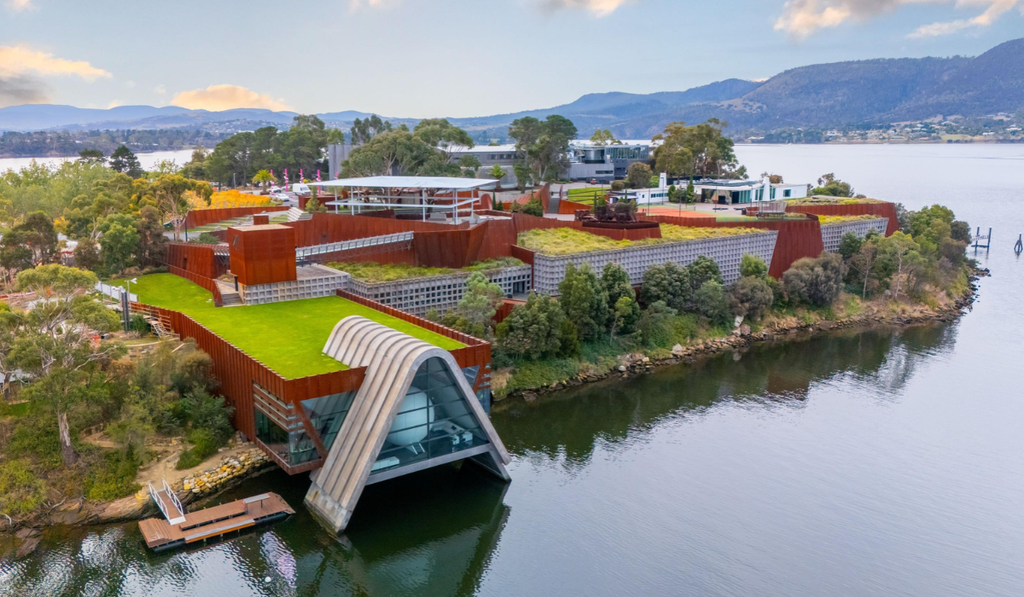
MONA is one of Australia’s best-known private art museums. It features a distinctive collection of contemporary and historical artworks, along with unique architectural spaces. The museum attracts visitors interested in art, design and cultural experiences. It is also accessible from Hobart through road transport and ferry services.
Bellerive Beach
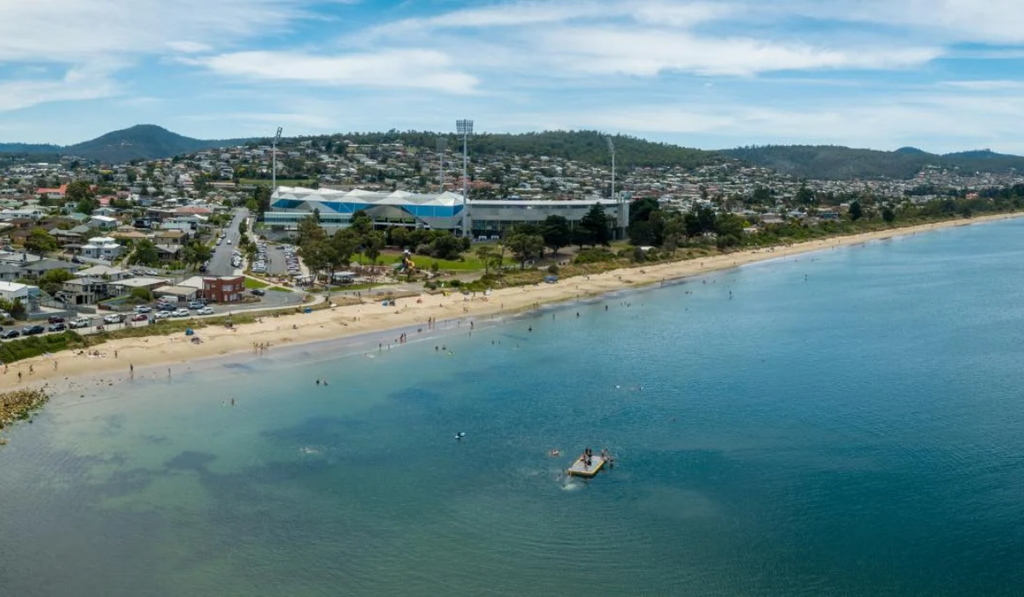
Bellerive Beach is located close to Ninja Stadium and offers a peaceful place to relax. Visitors can enjoy coastal views, walking areas and the surrounding scenery. Its location makes it a convenient attraction for cricket fans visiting the stadium. The beach is particularly enjoyable during pleasant weather.
Hobart Waterfront

Hobart Waterfront is a popular area featuring harbour views, restaurants, seafood outlets and walking spaces. Visitors can explore the historic waterfront, enjoy local food and experience the city’s maritime atmosphere. It is one of the most attractive areas of Hobart and can be included in a short sightseeing trip.
Frequently Asked Questions About Ninja Stadium
1. Where is Ninja Stadium located?
Ninja Stadium is located in Bellerive, Hobart, Tasmania, Australia. It is situated on the eastern shore of the River Derwent, approximately 10 minutes by road from Hobart’s city centre.
2. What is the seating capacity of Ninja Stadium?
Ninja Stadium has a seating capacity of approximately 19,500 spectators. It features the Ricky Ponting Stand, David Boon Stand, Members Pavilion and additional seating areas.
3. Which cricket teams play at Ninja Stadium?
Ninja Stadium is the home ground of the Tasmanian Tigers and Hobart Hurricanes. It hosts domestic cricket competitions, including the Sheffield Shield and Big Bash League.
4. Is Ninja Stadium good for batting or bowling?
Ninja Stadium generally offers balanced conditions for both batters and bowlers. Fast bowlers can receive early movement, while batting becomes easier once players settle at the crease.
5. What was Ninja Stadium previously called?
The ground was originally known as Bellerive Oval and later became Blundstone Arena. It was renamed Ninja Stadium in 2024 following a naming-rights partnership with SharkNinja.
6. Has Ninja Stadium hosted international cricket matches?
Yes, Ninja Stadium has hosted Test matches, ODIs and T20 Internationals. It has also hosted matches during the 2015 Cricket World Cup and 2022 T20 World Cup.
Conclusion
Ninja Stadium is one of Tasmania’s most important sporting venues, combining more than a century of history with modern facilities and international cricket standards. Located in Bellerive, Hobart, the ground has hosted several memorable matches involving Australia and other international teams.
From Adam Voges’ historic 269 not out to Glenn Maxwell’s T20I century, the stadium has witnessed outstanding individual performances. Its balanced pitch, seating capacity of approximately 19,500 and scenic location near the River Derwent make it a popular destination for cricket fans.
Whether you want to explore Ninja Stadium’s history, pitch report, international records or nearby attractions, this venue offers plenty of interesting information for cricket enthusiasts.
Read Also: Sawai Mansingh Stadium || Varanasi Cricket Stadium